
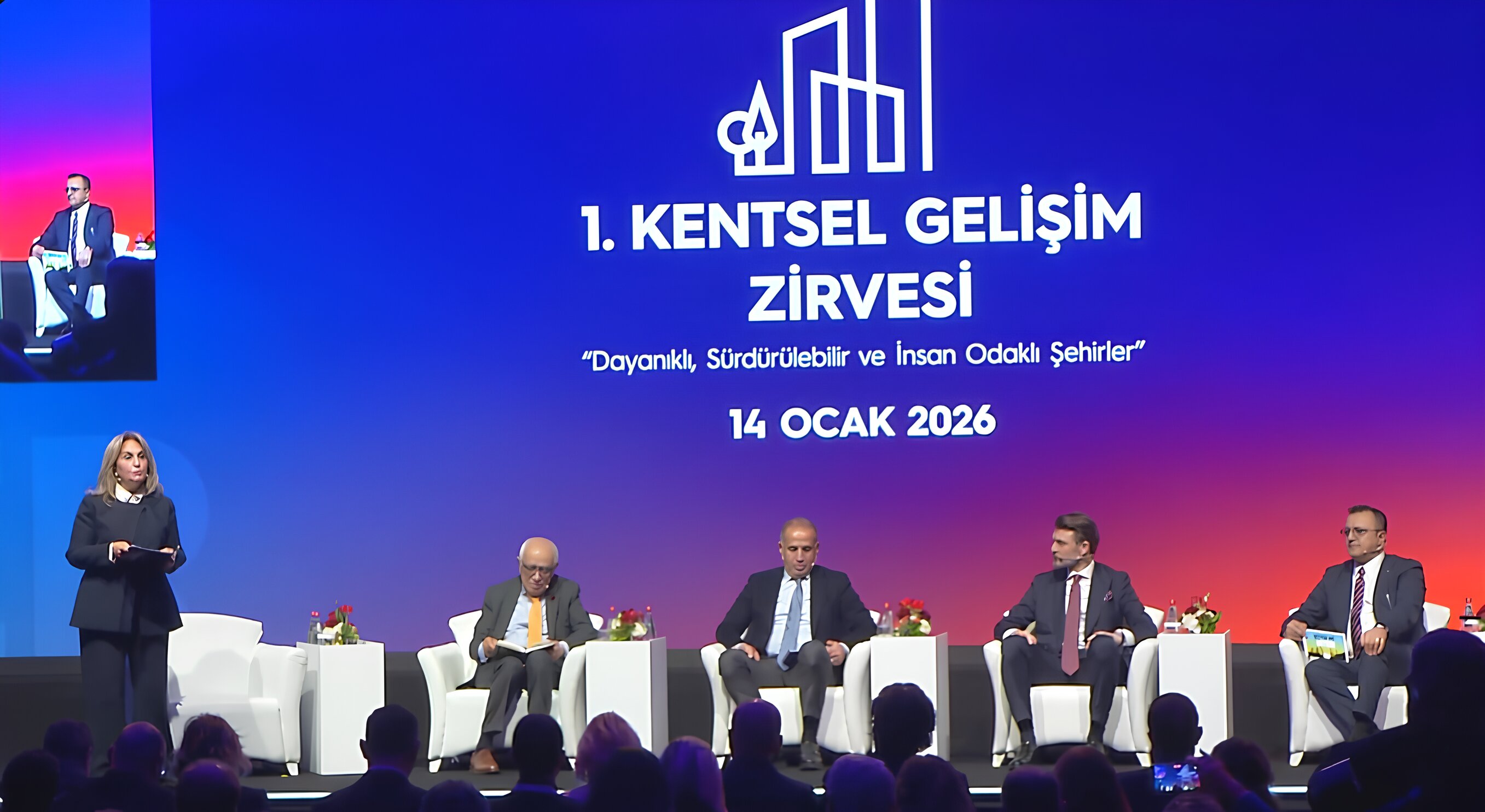
Architect İlhan Turan
As an architect striving to bridge the gap between the
construction industry and public administration, I have worked in the field for
many years and held various positions. Throughout my 15 years of public sector
experience, I have taken on responsibilities both in local government and in
the field of implementation. As a member of the Board of Directors of İNDER
(Istanbul Construction Contractors Association), I continue to be involved in
urban transformation, not only in its technical aspects but also in its social
and legal dimensions. In this article, I would like to share my experiences and
proposed solutions, gained from transformation projects in Istanbul,
particularly from the reconciliation processes conducted with landowners, based
on my own observations.
The future of Istanbul lies in urban transformation
We live, work, and produce in Istanbul. But we can no longer
ignore one reality: a potential earthquake in this city threatens not only
buildings but the entire fabric of the city. The building stock resulting from
unplanned growth between 1950 and 1980 poses a significant risk today, both in
terms of engineering and legal compliance.
As someone who has been working in this transformation for
years, I can say this clearly: Urban transformation is not an architectural
choice, but a social necessity. However, managing this process is not just
about building. The real issue is directly related to the relationship
established with citizens, the sustainability of financing, the management of
bureaucratic processes, and the functioning of the judiciary.
Why is urban transformation necessary?
Most of the buildings located in city centers today were
constructed according to old regulations, without permits or supervision. They
have inadequate infrastructure, weak load-bearing systems, and lack earthquake
safety. Most of these buildings are home to low-income citizens. For these
people, renovating their own buildings is nearly impossible.
This is where we contractors and the public have a great responsibility.
This transformation process is not only for investment purposes, but also for
the responsibility of improving quality of life and ensuring safety. State
incentives, local government coordination, and the implementing power of the
private sector must work together.
URBAN TRANSFORMATION ISSUES FROM MY PERSPECTIVE
1. Planning processes and legal uncertainties
The first obstacle we encounter when starting a project is
planning approaches that do not take regional differences into account. Each
district in Istanbul has its own unique land value, building density, and
social fabric. Unfortunately, however, the centralized planning approach
ignores these differences.
Plans are suspended, objections are raised, and the process is
prolonged. Court proceedings take years. Most importantly, decisions in these
courts are often shaped by the opinions of experts who are not specialists in
the field. There is an urgent need for courts specializing in zoning law and an
expert witness system with genuine technical knowledge.
2. Financing issue
One of the most fundamental issues I encounter in the field
today is access to financing. Especially in the initial stages of projects,
resources from pre-sales have decreased. Banks are also reluctant to provide loans
due to high interest rates.
To overcome this process:
Special funds for urban transformation projects need to be
established,
Low-interest, long-term credit opportunities need to be
provided,
Balance needs to be achieved between districts in terms of fees
and license costs.
Otherwise, many contractors either do not start the project at
all or are forced to leave it unfinished.
3. Procurement of materials and labor in practice
It is very difficult to carry out a project in an environment
where costs are constantly changing. Fluctuations in material prices make
planning impossible. On the other hand, finding qualified labor is almost
impossible. Young people are no longer turning to this field. This also
negatively affects the quality of work.
Based on this, I believe that vocational high schools and
sectoral training programs need to be redesigned. This is not only a necessity
for the sector but also for the country's economy.
4. Licensing and permit processes
Before starting a project, we have to wait months, sometimes
even years, to obtain zoning status, project approval, and permits. During this
time, the investor's motivation declines, and landowners lose confidence.
My suggestion is to move the process to a digital environment,
reduce the number of signatures, and accelerate the pre-approval system. This
way, we save time and strengthen the climate of trust.
5. The negotiation process: This is where the most effort is
expended
As a contractor, I can say this clearly: We spend the most time
and energy on the negotiation process with landowners. There are 30–40 owners
on the same parcel. They all have different expectations. Inheritance issues,
shared deeds, representation crises, information pollution... Sometimes even
unethical competition undermines this process.
Citizens often do not make decisions without knowing what their
neighbors are getting. This prolongs the process. Yet, reconciliation could be
achieved much faster with a fair and transparent system.
My proposed solution: Sworn settlement and project development
offices
The model I have been proposing for a long time is this: Sworn
settlement offices should be established under municipal or public supervision,
consisting entirely of impartial and expert individuals. These offices should:
Meet with property owners individually,
Prepare technical specifications, projects, and cost analyses,
Ensure that every contractor submits a bid based on the same
file,
Ensure that the process is transparent and auditable.
Thanks to this system, contractors and property owners do not come
face to face. Decisions are made on a basis that everyone trusts. Most
importantly, significant savings are achieved in terms of time and cost.
My experience confirms it: When the public is at the table, the
rate of agreement increases.
My 15 years of public service experience shows that when local
government is at the table, citizens are more easily persuaded. While
participation in our projects initially stands at 10-15%, when municipal
officials sit at the table, this rate can rise to 80%.
This is because citizens trust the public sector. It is our duty
not to betray that trust.
MY FINAL WORD:
Urban transformation is not an arbitrary application. It is a
necessity. We must now accelerate transformation in terms of life safety, city
safety, and economic sustainability. But in doing so, we must establish a fair,
transparent, and sustainable system.
I, İlhan Turan, wrote this article not only to describe the
problems we face, but also to put forward my proposed solutions. We must work
together for the future of Istanbul.
Written by: Architect İlhan Turan
Tags: #UrbanTransformation #İlhanTuran #İNDER
#ReconciliationProcess #SwornOfficeModel #EarthquakeReality
#IstanbulTransformation